Wilks Score Calculator

Calculate your Wilks coefficient to compare your strength across different body weights and sexes.

The Wilks Score Calculator computes your Wilks coefficient to compare powerlifting strength across different body weights and sexes. Enter your sex, body weight, and total lifted (squat + bench + deadlift) to get a standardized score. Scores above 300 are intermediate, above 400 advanced, and above 500 elite level in competitive powerlifting.

Your data stays in your browser
Was this tool useful?
Tutorial

How to Use the Wilks Calculator

1
1

Enter Gender

The coefficient varies based on biological sex.

2
2

Body Weight

Input your current weight in your preferred unit (usually kg).

3
3

Total Lifted

Sum your best marks (1RM) for squat, bench press, and deadlift.

Guide

Complete Guide to Wilks Score Calculator

What is Wilks Score Calculator?

Wilks Score Calculator is a specialized online tool designed for working with Wilks coefficient and powerlifting. It provides an intuitive, streamlined interface that simplifies complex calculations or operations that would otherwise require specialized desktop software or tedious manual computation. Built with modern web technologies, the tool runs entirely in your browser, ensuring that your data remains private and results are delivered instantly without any server communication or external dependencies.

Why Wilks Score Calculator Matters

Understanding and applying Wilks coefficient and powerlifting correctly is essential in many professional and academic contexts. Manual approaches are not only time-consuming but also error-prone, and specialized desktop software often comes with expensive licensing costs. This free tool bridges that gap by offering professional-grade functionality accessible from any device. Whether you are a student, professional, researcher, or enthusiast, you will find this tool saves significant time and eliminates calculation errors.

Key Concepts

The core concepts behind Wilks coefficient and powerlifting form the foundation for effective use of this tool. Understanding the underlying principles ensures you can interpret results correctly and apply them in your specific context. Each input parameter is designed to be intuitive, with clear labels and sensible defaults that guide new users while providing the flexibility experienced users expect. The tool handles all computational complexity while you focus on understanding and applying the outputs.

Best Practices

For the best results, ensure your input data is as precise and accurate as possible. Double-check units and formatting before running calculations. When comparing results across different scenarios, keep all other variables constant to isolate effects. The tool auto-saves your last inputs in browser local storage for convenience. Remember that while this tool provides accurate calculations, always verify critical results with domain-specific validation methods appropriate to your field.
Examples

Worked Examples

Example: Basic Calculation

Given: Standard input values for a typical use case

1

Step 1: Enter your known values into the tool's input fields

2

Step 2: The tool automatically computes results using the appropriate algorithms and formulas

3

Step 3: Review the output, verify it matches your expectations, and copy or share the result

Result: Instant, accurate output ready for use in your work or studies

Example: Advanced Scenario

Given: Complex input parameters for a professional use case

1

Step 1: Configure advanced settings to match your specific requirements and constraints

2

Step 2: Enter precise values based on real-world data from your project or research

3

Step 3: Compare the output with expected values or benchmarks to validate accuracy

Result: Professional-grade output suitable for reports, presentations, and analysis

Use Cases

Common Use Cases

Powerlifting Meet

Find out who's the strongest lifter 'pound-for-pound' in the competition. This makes it an invaluable resource for professionals and students who need quick, accurate results without specialized software. All processing runs locally in your browser for complete privacy and instant feedback.

Progress Tracking

Track your strength progress relative to changes in your body weight. This makes it an invaluable resource for professionals and students who need quick, accurate results without specialized software. All processing runs locally in your browser for complete privacy and instant feedback.

Formula

Formulas Used

Wilks Coefficient

Wilks=Total×500a+bx+cx2+dx3+ex4+fx5Wilks = Total \times \frac{500}{a + bx + cx^2 + dx^3 + ex^4 + fx^5}
VariableMeaning
Totalsquat + bench + deadlift (kg)
xbody weight (kg)
a-fsex-specific coefficients

Sources

Frequently Asked Questions

?What is the Wilks score and why does it matter?

The Wilks score is a coefficient used in powerlifting to compare the relative strength of lifters across different body weights and sexes. It levels the playing field so a 60 kg lifter can be fairly compared to a 100 kg lifter based on their total lifted weight.

?How is the Wilks score calculated?

The Wilks score is calculated by multiplying your powerlifting total (sum of best squat, bench press, and deadlift) by a coefficient derived from a polynomial formula based on your body weight and sex. This tool handles all the math automatically.

?What is a good Wilks score?

A Wilks score above 300 is considered intermediate, above 400 is advanced, and above 500 is elite level. Scores above 400 are competitive at regional meets, while national and international competitors typically score well above 450.

?Does the Wilks formula differ for men and women?

Yes. The Wilks formula uses different polynomial coefficients for male and female lifters, which is why you need to select your sex when using the calculator. This ensures fair comparison across genders.

?What weight should I enter for Total Lifted?

Enter the sum of your best single-rep maximums (1RM) for squat, bench press, and deadlift. This is your powerlifting total, which is the standard input for the Wilks formula.

?Is the Wilks score the same as the DOTS or IPF GL score?

No. While all three are used to compare lifters of different body weights, they use different formulas. The Wilks coefficient was the standard for decades, while DOTS and IPF GL Points are newer alternatives. The Wilks score remains widely recognized and used in many federations.

?Is my data private when using this calculator?

Yes. All calculations are performed locally in your browser. Your body weight, lifting totals, and results are never sent to any server.

Help us improve

How do you like this tool?

Every tool on Kitmul is built from real user requests. Your rating and suggestions help us fix bugs, add missing features and build the tools you actually need.

Rate this tool

Tap a star to tell us how useful this tool was for you.

Suggest an improvement or report a bug

Missing a feature? Found a bug? Have an idea? Tell us and we'll look into it.

Related Tools

Recommended Reading

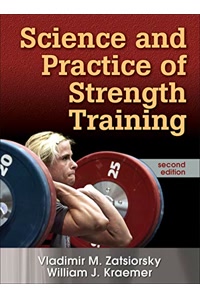
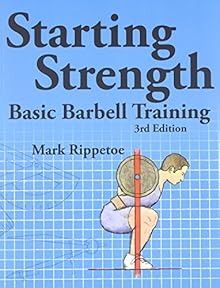
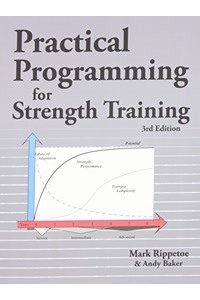
Recommended Books on Strength Training & Powerlifting

As an Amazon Associate we earn from qualifying purchases.

Boost Your Capabilities

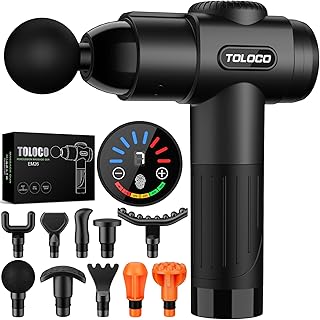
Professional Products to Boost Your Performance

As an Amazon Associate we earn from qualifying purchases.

Newsletter

Get Free Productivity Tips & New Tools First

Join makers and developers who care about privacy. Every issue: new tool drops, productivity hacks, and insider updates — no spam, ever.

Priority access to new tools
Unsubscribe anytime, no questions asked