Check Your Strength Standards

Check your powerlifting strength level with Wilks, DOTS, and IPF GL scoring across squat, bench, deadlift, and OHP.

Check your powerlifting strength standards against population benchmarks. Enter your squat, bench press, deadlift, and overhead press one-rep maxes to see your classification from beginner to elite, a radar chart of your lift balance, and simultaneous Wilks, DOTS, and IPF GL scores. The tool includes PR history tracking with sparkline trends, clipboard copy, and PNG export. Everything runs in your browser with zero server calls.

Your data stays in your browser
Was this tool useful?
Tutorial

How to Use

1
1

Enter Your Lifts

Input your bodyweight and one-rep max for squat, bench press, deadlift, and overhead press. Toggle between metric and imperial.

2
2

Review Your Profile

See your classification from beginner to elite for each lift, a radar chart of lift balance, and Wilks, DOTS, and IPF GL scores.

3
3

Track Your Progress

Save results to local history and track Wilks score and total trends over training cycles with sparkline visualizations.

Guide

Complete Guide to Strength Standards

Why Strength Standards Matter

Raw numbers mean little without context. Benching 100 kg is impressive at 60 kg bodyweight but average at 120 kg. Strength standards normalize performance against bodyweight and gender, giving you a clear picture of where you stand relative to the lifting population and what realistic goals look like.

Understanding Bodyweight Multipliers

Standards are expressed as multiples of bodyweight. A 1.5x squat means you squat 1.5 times your bodyweight. This simple metric cuts through the noise of absolute numbers and makes strength comparable across different body sizes. The multipliers used here are derived from decades of competition data.

Wilks vs DOTS vs IPF GL

Wilks was introduced in 1994 and updated in 2020. DOTS was developed by Tim Henriques to better handle extreme weight classes. IPF GL (Goodlift Points) is the official IPF formula since 2019. Each uses different polynomial coefficients but all serve the same purpose; normalizing strength across bodyweights.

Programming for Strength Progress

Moving from novice to intermediate requires consistent progressive overload across 6 to 12 months. Intermediate to advanced typically takes 2 to 4 years of structured periodization. Elite level requires genetic potential, multi-year dedication, and often coaching. Track your Wilks trend over time to measure true progress.
Examples

Worked Examples

Example: Male Intermediate Lifter

Given: a male, 80 kg bodyweight, squat 140 kg, bench 100 kg, deadlift 180 kg, OHP 60 kg.

1

Step 1: SBD Total = 140 + 100 + 180 = 420 kg.

2

Step 2: BW multipliers: SQ 1.75x, BP 1.25x, DL 2.25x, OHP 0.75x.

3

Step 3: Categories: SQ Intermediate, BP Novice, DL Advanced, OHP Intermediate.

Result: Overall Intermediate level with a strong deadlift and a bench press that needs focused work.

Example: Female Advanced Lifter

Given: a female, 63 kg bodyweight, squat 120 kg, bench 70 kg, deadlift 150 kg, OHP 45 kg.

1

Step 1: SBD Total = 120 + 70 + 150 = 340 kg.

2

Step 2: BW multipliers: SQ 1.90x, BP 1.11x, DL 2.38x, OHP 0.71x.

3

Step 3: Categories: SQ Advanced, BP Advanced, DL Advanced, OHP Intermediate.

Result: Overall Advanced level with balanced upper and lower body strength.

Use Cases

Use Cases

Evaluate Meet Readiness

Powerlifters preparing for competition can check whether their squat, bench, and deadlift meet intermediate or advanced standards for their weight class. This helps set realistic total targets before registering for a meet.

Balance Lift Development

The radar chart reveals imbalances between lifts. If your deadlift is advanced but bench is novice, you know exactly where to focus your training block for the best total improvement.

Compare Across Weight Classes

Wilks, DOTS, and IPF GL scores normalize strength across different bodyweights. Use these to fairly compare lifters of different sizes or track your relative strength as your bodyweight changes.

Frequently Asked Questions

?What are Wilks, DOTS, and IPF GL scores?

All three are formulas that normalize powerlifting totals across different bodyweights. They allow fair comparison between lifters of different sizes by applying weight-dependent coefficients.

?Which scoring system should I use?

DOTS and IPF GL are newer and considered more accurate at extreme bodyweights. Wilks is the most widely recognized historically. All three are provided so you can compare.

?How are the strength categories determined?

Categories are based on bodyweight multipliers derived from aggregated competition data. A beginner squats around 0.75x bodyweight while an elite lifter exceeds 2.75x for men.

?Does OHP count toward the powerlifting total?

No. The official powerlifting total (SBD) includes only squat, bench press, and deadlift. OHP is included separately for overall strength assessment.

?How often should I retest my maxes?

Every 8 to 12 weeks at the end of a training block. Testing too frequently interferes with training progress and increases injury risk.

?Is my data private when using this tool?

Completely. All calculations run in your browser. History is stored locally on your device and never sent to any server.

?Is this tool free to use?

Yes. Fully free with no sign-up, no limits, and no ads.

?Does it work for both men and women?

Yes. The tool uses gender-specific strength standards and scoring coefficients to provide accurate classification for both men and women.

Help us improve

How do you like this tool?

Every tool on Kitmul is built from real user requests. Your rating and suggestions help us fix bugs, add missing features and build the tools you actually need.

Rate this tool

Tap a star to tell us how useful this tool was for you.

Suggest an improvement or report a bug

Missing a feature? Found a bug? Have an idea? Tell us and we'll look into it.

Related Tools

Recommended Reading

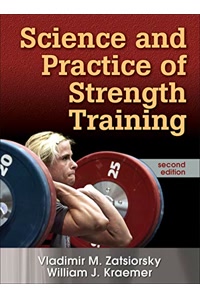
Recommended Books on Strength Training and Powerlifting

As an Amazon Associate we earn from qualifying purchases.

Boost Your Capabilities

Recommended Products for Strength Training

As an Amazon Associate we earn from qualifying purchases.

Newsletter

Get Free Productivity Tips & New Tools First

Join makers and developers who care about privacy. Every issue: new tool drops, productivity hacks, and insider updates — no spam, ever.

Priority access to new tools
Unsubscribe anytime, no questions asked