BAC Calculator

Estimate your Blood Alcohol Content using the Watson formula with drink tracking and legal limit comparison.

The BAC Calculator uses the Watson formula to estimate your Blood Alcohol Content based on your body profile and drink history. Unlike the simpler Widmark formula, the Watson method factors in Total Body Water using age, height, and weight for greater accuracy. Track multiple drink types, compare against legal limits across jurisdictions, and see a projected BAC timeline showing when you will return to sobriety.

Loading...
Your data stays in your browser
Tutorial

How to Use the BAC Calculator

1
1

Enter Your Body Profile

Input your weight in kilograms, height in centimeters, age, and select your gender. These values are used in the Watson formula to estimate your Total Body Water.

2
2

Add Your Drinks

Select the type of drink (beer, wine, shot, cocktail, strong beer, or champagne), set the quantity, and specify how many hours ago you consumed it. Click Add to include it in the calculation.

3
3

Review Your BAC Results

See your estimated BAC, status badge, legal limit comparison for your jurisdiction, time to sobriety estimate, and a 12-hour BAC projection chart.

Guide

Complete Guide to Blood Alcohol Content

Understanding Blood Alcohol Content

Blood Alcohol Content (BAC) measures the percentage of alcohol in your bloodstream by weight. A BAC of 0.08% means 0.08 grams of alcohol per 100 milliliters of blood. Even small amounts of alcohol impair reaction time, judgment, and motor coordination. BAC rises as you drink and falls as your liver metabolizes the alcohol at a roughly constant rate of 0.015% per hour.

The Watson Formula Explained

The Watson formula estimates Total Body Water (TBW) as a function of age, height, weight, and sex. For males: TBW = 2.447 - 0.09516 x age + 0.1074 x height(cm) + 0.3362 x weight(kg). For females: TBW = -2.097 + 0.1069 x height(cm) + 0.2466 x weight(kg). BAC is then calculated from the grams of pure alcohol consumed divided by TBW, adjusted by a constant factor.

Factors Affecting BAC

Beyond the variables in the formula, many other factors influence your actual BAC. Eating before or while drinking slows alcohol absorption significantly. Carbonated drinks (champagne, mixers with soda) can speed absorption. Medications, liver health, genetic enzyme variations, and hydration level all play a role. The Watson formula provides a useful estimate but cannot capture all individual variation.

Legal Limits Around the World

Most US states set the legal BAC limit at 0.08%, matching the UK. The European Union generally uses 0.05%, though some countries like Czech Republic and Hungary enforce zero tolerance. Australia follows the 0.05% standard. Japan has one of the strictest limits at 0.03%. Many jurisdictions impose lower limits for commercial drivers and novice drivers regardless of the general limit.
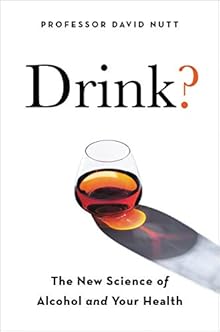
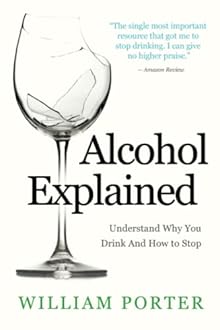
Examples

Worked Examples

Example: Male After Two Beers

Given: Male, 80 kg, 175 cm, 30 years old, 2 standard beers (355 ml, 5% ABV) consumed 1 hour ago.

1

Step 1: Calculate TBW (male): 2.447 - 0.09516 x 30 + 0.1074 x 175 + 0.3362 x 80 = 2.447 - 2.855 + 18.795 + 26.896 = 45.283 L.

2

Step 2: Alcohol grams per beer: 355 x 0.05 x 0.789 = 14.0 g. Two beers = 28.0 g.

3

Step 3: Raw BAC = (0.806 x 28.0 x 1.2) / (45.283 x 10) = 27.08 / 452.83 = 0.0598%.

4

Step 4: Subtract elimination for 1 hour: 0.0598 - 0.015 = 0.0448%.

Result: Estimated BAC = 0.045%; below the US limit of 0.08% but above the EU limit of 0.05%.

Example: Female After Three Glasses of Wine

Given: Female, 60 kg, 165 cm, 25 years old, 3 glasses of wine (148 ml, 12% ABV) consumed 30 minutes ago.

1

Step 1: Calculate TBW (female): -2.097 + 0.1069 x 165 + 0.2466 x 60 = -2.097 + 17.639 + 14.796 = 30.338 L.

2

Step 2: Alcohol grams per glass: 148 x 0.12 x 0.789 = 14.01 g. Three glasses = 42.03 g.

3

Step 3: Raw BAC = (0.806 x 42.03 x 1.2) / (30.338 x 10) = 40.66 / 303.38 = 0.134%.

4

Step 4: Subtract elimination for 0.5 hours: 0.134 - 0.0075 = 0.127%.

Result: Estimated BAC = 0.127%; well above all common legal limits. Estimated ~8.4 hours until sober.

Use Cases

Typical Use Cases

Social Dinner Planning

Before going out, estimate how many drinks you can have over the evening while staying below your country's legal driving limit. Add drinks progressively and watch the BAC projection to plan a safe ride home.

Morning After Check

If you had drinks the previous evening, enter the approximate quantities and hours ago to see whether your BAC has returned to zero. Remember the body eliminates approximately 0.015% per hour, so heavy drinking may still register the next morning.

Educational Reference

Use the calculator to understand how different drink types (beer versus spirits versus cocktails) affect BAC differently based on alcohol percentage and volume. Compare how gender and body weight significantly change the result.

Frequently Asked Questions

?What is the Watson formula?

The Watson formula estimates Total Body Water (TBW) from age, height, weight, and gender. BAC is then derived from TBW and the amount of pure alcohol consumed. It is more accurate than the simpler Widmark formula because it accounts for body composition differences.

?How accurate is this BAC estimate?

This provides a reasonable estimate but actual BAC depends on additional factors such as food intake, liver health, medications, hydration level, and individual metabolism. Always err on the side of caution.

?What does the elimination rate of 0.015 mean?

The average human body metabolizes alcohol at approximately 0.015% BAC per hour. This is a fixed rate regardless of how much you drank; your liver can only process a set amount of alcohol per hour.

?Why do legal limits differ by country?

Different countries set different BAC thresholds based on their traffic safety research and policy decisions. The EU generally uses 0.05%, the US and UK use 0.08%, and Japan uses a strict 0.03%. Some jurisdictions have zero tolerance for certain driver categories.

?Does gender affect BAC?

Yes, significantly. Women generally have lower Total Body Water relative to body weight, which means the same amount of alcohol produces a higher BAC. The Watson formula accounts for this biological difference.

?Can I use this to know if I am safe to drive?

No. This is an educational estimate only. Many factors affect your actual impairment level beyond BAC, including fatigue, medications, and tolerance. If you have consumed any alcohol, the safest option is always not to drive.

?Is this BAC calculator free to use?

Yes, completely free with no registration required. You can use it as many times as you need with no limits or ads.

?Is my personal data kept private?

Yes. All calculations run entirely in your browser. No weight, height, age, or drinking data is sent to any server or stored anywhere.

?How long does it take to sober up completely?

At the average elimination rate of 0.015% per hour, a BAC of 0.08% takes roughly 5.3 hours to reach zero. A BAC of 0.15% takes approximately 10 hours. There is no way to speed up this process; coffee, cold showers, and exercise do not lower BAC.

?What is the difference between BAC and intoxication?

BAC is a measurable chemical concentration in your blood. Intoxication is a subjective experience that varies by individual tolerance. A regular drinker may feel less impaired at the same BAC as an occasional drinker, but their driving ability is still reduced.

Related Tools

Help us improve

How do you like this tool?

Every tool on Kitmul is built from real user requests. Your rating and suggestions help us fix bugs, add missing features and build the tools you actually need.

Rate this tool

Tap a star to tell us how useful this tool was for you.

Suggest an improvement or report a bug

Missing a feature? Found a bug? Have an idea? Tell us and we'll look into it.

Recommended Reading

Recommended Books on Alcohol Science and Mindful Drinking

As an Amazon Associate we earn from qualifying purchases.

Boost Your Capabilities

Recommended Products for Responsible Drinking

As an Amazon Associate we earn from qualifying purchases.

Newsletter

Get Free Productivity Tips & New Tools First

Join makers and developers who care about privacy. Every issue: new tool drops, productivity hacks, and insider updates — no spam, ever.

Priority access to new tools
Unsubscribe anytime, no questions asked