Random Number Generator

Generate random numbers within a specified range.

The Random Number Generator produces cryptographically secure random integers within any range you specify. Uses the Web Crypto API for true randomness, making it suitable for simulations, games, lotteries, statistical sampling, and any application requiring unbiased random selection.

Rolling dice...
Your data stays in your browser
Was this tool useful?
Tutorial

How to Use the Random Number Generator

1
1

Set the Range

Enter the minimum and maximum values for your random numbers.

2
2

Choose Quantity

Specify how many random numbers you want to generate (1–1000).

3
3

Generate

Click the Generate button. Results appear instantly below.

Guide

Complete Guide to Random Numbers

What Is Random Numbers?

Random Numbers is a fundamental concept in mathematics with wide-ranging applications. Understanding its definition and properties is essential for students and professionals alike. The concept appears in various branches of mathematics including algebra, number theory, and applied mathematics. This calculator provides instant, accurate results for all random numbers computations, saving time and reducing the chance of manual calculation errors.

Why It Matters

Random Numbers plays a crucial role in mathematics education, science, engineering, and everyday problem solving. From academic homework to professional calculations, understanding how to work with random numbers is a skill that transfers across disciplines. In computer science, algorithms related to random numbers are fundamental building blocks. In finance and business, these calculations appear in revenue analysis, cost optimization, and data interpretation.

Key Concepts

There are several key concepts to understand when working with random numbers. First, know the precise mathematical definition and notation. Second, understand the fundamental properties and rules that govern operations. Third, recognize common patterns and special cases that simplify calculations. Fourth, be aware of edge cases and limitations. Mastering these concepts ensures you can apply random numbers correctly in any context.

Best Practices

When working with random numbers, always double-check your inputs for accuracy. Use this calculator to verify manual calculations rather than relying solely on mental math. For complex problems, break them into smaller steps. When presenting results, use appropriate precision and rounding. In programming contexts, be aware of floating-point limitations and use appropriate data types.

Examples

Worked Examples

Example: Basic Random Numbers Calculation

Given: input values from a typical problem

1

Step 1: Identify the values and the operation needed.

2

Step 2: Apply the appropriate formula or algorithm.

3

Step 3: Simplify and verify the result.

Result: See the calculator output for exact values

Example: Real-World Random Numbers Application

Given: a practical scenario

1

Step 1: Translate the real-world problem into mathematical terms.

2

Step 2: Perform the calculation using the tool.

3

Step 3: Interpret the result in the context of the original problem.

Result: The calculator provides the precise answer

Use Cases

Use Cases

Lottery Numbers

Random Numbers is widely used in academic settings where students need to solve problems involving these mathematical operations. From elementary school through university, understanding random numbers is a core skill tested on standardized exams like the SAT, GRE, and professional certification tests. This calculator helps students verify their work and build confidence in their mathematical abilities.

Dice Simulation

In professional environments, random numbers calculations appear in engineering specifications, financial modeling, scientific research, and data analysis. Engineers use these computations when designing systems and verifying tolerances. Financial analysts apply them in revenue projections and risk assessment. Scientists rely on accurate calculations for experimental data analysis and hypothesis testing.

Random Sampling

Programming and computer science applications of random numbers are extensive. From basic algorithm implementation to advanced numerical computing, these operations form the building blocks of software development. Understanding the mathematical foundations helps developers write more efficient code and avoid common computational pitfalls like overflow, underflow, and precision loss.

Formula

Mathematical Formulas

Uniform Distribution

P(X=k)=1ba+1,k{a,a+1,,b}P(X = k) = \frac{1}{b - a + 1}, \quad k \in \{a, a+1, \ldots, b\}
VariableMeaning
aMinimum value (inclusive)
bMaximum value (inclusive)

Frequently Asked Questions

?What is random numbers?

Random Numbers is a fundamental mathematical concept used in calculations across many disciplines. This tool computes results instantly based on the mathematical definitions and formulas for random numbers.

?How do I use the random numbers calculator?

Simply enter your values in the input fields and the result will be calculated automatically. No need to press a button—results appear in real time as you type.

?Where is random numbers used in real life?

Random Numbers has applications in education, science, engineering, finance, computer science, and everyday problem solving. It is one of the most commonly used mathematical operations.

?Can this calculator handle large numbers?

Yes. This calculator handles integers and decimals of practical size. For extremely large numbers, JavaScript's numeric precision applies, but results remain accurate for most real-world use cases.

?What is the formula for random numbers?

The key formulas are displayed in the Formula section above. Each formula includes variable definitions and can be used for manual calculation as well.

?Is my data private when using this calculator?

Yes. All calculations run entirely in your browser using JavaScript. No data is sent to any server, and nothing is stored or logged. Your inputs remain completely private.

?Is this random numbers calculator free?

Yes. This tool is completely free to use with no limits, no sign-up required, and no advertisements. Use it as many times as you need.

?Can I use this calculator on my phone?

Yes. The calculator is fully responsive and works on all devices including smartphones, tablets, and desktop computers. No app installation is required.

Help us improve

How do you like this tool?

Every tool on Kitmul is built from real user requests. Your rating and suggestions help us fix bugs, add missing features and build the tools you actually need.

Rate this tool

Tap a star to tell us how useful this tool was for you.

Suggest an improvement or report a bug

Missing a feature? Found a bug? Have an idea? Tell us and we'll look into it.

Related Tools

Recommended Reading

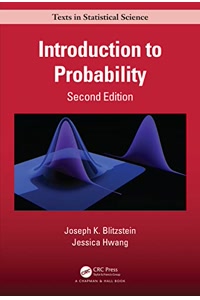
Recommended Books on Probability & Randomness

As an Amazon Associate we earn from qualifying purchases.

Boost Your Capabilities

Professional Products to Boost Your Math Skills

As an Amazon Associate we earn from qualifying purchases.

Newsletter

Get Free Productivity Tips & New Tools First

Join makers and developers who care about privacy. Every issue: new tool drops, productivity hacks, and insider updates — no spam, ever.

Priority access to new tools
Unsubscribe anytime, no questions asked