DCA Investment Optimizer

Optimize your Dollar Cost Averaging strategy. Automatically distribute your monthly budget based on asset performance and custom category allocations.

The Dollar-Cost Averaging (DCA) Calculator helps you model the results of investing a fixed amount at regular intervals over time. Enter your periodic investment amount, frequency, expected return rate, and time horizon to see how your portfolio grows through market ups and downs. DCA reduces the impact of volatility by buying more shares when prices are low and fewer when prices are high — this tool visualizes that strategy with detailed projections and charts.

Calculating Strategy...
Your data stays in your browser
Was this tool useful?
Tutorial

How to use

1
1

Set your budget and categories

Enter your monthly investment amount and configure categories (stocks, crypto, ETFs, etc.) with the percentage you want allocated to each. The total should add up to 100%.

2
2

Add your assets with performance data

For each asset, enter the total return and last month's return. Positive values are gains, negative values are losses. The algorithm uses this data to decide how to split your investment.

3
3

Understand the logic: more to the losers

The key to smart DCA: assets with bigger losses receive a larger share of funds. You buy more when they're down, lowering your average cost. Assets with gains receive less, because they're already expensive.

4
4

Adjust the distribution temperature

Low temperature (1-5): heavily concentrates investment in the most beaten-down assets. High temperature (20-50): more even distribution across all assets. Adjust based on your risk tolerance.

5
5

Review the plan and export

The 'Amount to Invest' column shows exactly how much to allocate to each asset this month. Export your configuration as JSON or bookmark the URL to update your data next month.

Guide

Complete Guide to Dollar-Cost Averaging

What Is Dollar-Cost Averaging?

Dollar-Cost Averaging (DCA) is an investment strategy where you invest a fixed dollar amount at regular intervals (weekly, bi-weekly, or monthly) regardless of the asset's current price. When prices are low, your fixed amount buys more shares; when prices are high, it buys fewer. Over time, this averages out your cost per share and reduces the risk of investing a lump sum at a market peak. DCA is the default strategy for most 401(k) and retirement account contributions, making it the most widely practiced investment approach in the world.

Why DCA Matters for Investors

Market timing is extremely difficult — even professional fund managers consistently fail to beat simple buy-and-hold strategies. DCA removes the emotional decision of when to invest by automating contributions on a schedule. This eliminates the fear of buying at the top and the regret of not buying at the bottom. Research shows that DCA produces returns within 2-3% of lump-sum investing over long periods while significantly reducing volatility-related anxiety. For most people, the behavioral benefit of DCA — actually staying invested — outweighs the marginal return difference.

Key Concepts in DCA Calculation

The total invested amount equals your periodic contribution multiplied by the number of periods. The ending portfolio value depends on the return earned each period. The average cost basis is your total invested divided by total shares purchased. Dollar-cost averaging works best in volatile markets with an upward long-term trend — it underperforms lump-sum investing in consistently rising markets but outperforms in choppy or declining markets. The time horizon is critical: DCA's benefits compound over longer periods.

Best Practices for DCA Investing

Automate your contributions to remove emotional decision-making. Choose a frequency that aligns with your income schedule (monthly for salaried workers, bi-weekly for bi-weekly paychecks). Invest in broad index funds to maximize diversification alongside DCA. Do not stop contributions during market downturns — that is precisely when DCA provides the most value by lowering your average cost. Review and increase your contribution amount annually as your income grows. Use this calculator to model different scenarios before committing to a plan.
Examples

Worked Examples

Example: Monthly DCA into an Index Fund

Given: $500/month for 10 years with an average annual return of 8%.

1

Step 1: Total contributions = $500 × 12 × 10 = $60,000.

2

Step 2: Apply the future value of annuity formula: FV = P × [((1 + r)^n - 1) / r], where P = $500, r = 0.08/12, n = 120.

3

Step 3: FV = $500 × [((1.00667)^120 - 1) / 0.00667] ≈ $91,473.

Result: After 10 years, your $60,000 in contributions grows to approximately $91,473 — a gain of $31,473 from compound returns.

Example: Comparing DCA Frequencies

Given: $1,000/month vs. $250/week for 5 years at 7% annual return.

1

Step 1: Monthly: $1,000 × 60 months = $60,000 invested. FV ≈ $71,593.

2

Step 2: Weekly: $250 × 260 weeks = $65,000 invested (slightly more due to ~4.33 weeks/month). FV ≈ $77,847.

3

Step 3: Adjust for equal total investment — weekly contributions compound slightly faster.

Result: Weekly DCA produces marginally higher returns due to more frequent compounding, though the difference is small for most investors.

Use Cases

Use cases

Monthly crypto portfolio rebalancing

You hold Bitcoin, Ethereum and Solana. Ethereum has dropped 50% but you still believe in its long-term value. The optimizer allocates more funds to Ethereum to buy cheaper and lower your average cost, while allocating less to Bitcoin which has barely dipped. This maximizes your buying power during market corrections.

Stock investor with temporary dips

Nvidia has dropped 58% due to a market correction but its fundamentals remain strong. UnitedHealth is up 13%. The algorithm prioritizes Nvidia (buying cheap) and reduces UnitedHealth's allocation (already expensive). When Nvidia recovers, your returns will be significantly higher because you accumulated more shares at lower prices.

Diversified portfolio by categories

You split your budget: 30% stocks, 25% ETFs, 20% crypto, 15% savings, 10% metals. Within each category, the optimizer applies the same logic: more money to the most beaten-down asset. You maintain strategic diversification while optimizing purchases within each asset class for maximum long-term growth.

Risk control with temperature

At low temperature (3), nearly all your crypto budget goes to Ethereum which has dropped 100%. Too aggressive? Raise temperature to 25 for a more balanced split across all crypto assets, still prioritizing the fallen ones but without over-concentrating risk into a single asset position.

Month-to-month tracking

Each month you update your asset returns. The algorithm automatically recalculates optimal allocations based on the latest performance data. An asset that received little last month (because it was rising) may now receive more if it has started to fall, keeping your strategy dynamically adapted to market conditions.

Formula

Formulas Used

Future Value of Annuity (DCA)

FV=P×(1+r)n1rFV = P \times \frac{(1 + r)^n - 1}{r}
VariableMeaning
FVfuture value of the investment
Pperiodic payment amount
rperiodic interest rate (annual rate / periods per year)
ntotal number of periods

Average Cost Per Share

Avg Cost=PiPiSi\text{Avg Cost} = \frac{\sum P_i}{\sum \frac{P_i}{S_i}}
VariableMeaning
P_ipayment in period i
S_ishare price in period i

Frequently Asked Questions

?What is Dollar Cost Averaging (DCA)?

Dollar Cost Averaging is an investment strategy where you invest a fixed amount of money at regular intervals regardless of price, reducing the impact of volatility over time.

?How does the DCA Investment Optimizer work?

Enter your monthly budget, add your assets with their performance data, set category allocations, and the tool uses a Softmax scoring algorithm to distribute funds proportionally based on each asset's relative performance.

?What is the temperature parameter?

Temperature controls how evenly funds are distributed. A higher temperature produces a more equal split across assets, while a lower temperature concentrates more funds on higher-scoring (better-performing) assets.

?Is my investment data kept private?

Yes. All calculations run entirely in your browser. No financial data is sent to any server. Your portfolio information stays completely private.

?Can I export and import my configuration?

Yes. Use the Export JSON button to save your current setup and the Import JSON button to restore it later. Data is also saved in the URL for easy bookmarking.

?Can I create custom asset categories?

Yes. You can create and name your own categories, then allocate a percentage of your monthly budget to each one for a fully customized investment plan.

?How are asset scores calculated?

Each asset's score is the average of its total loss percentage and last month's loss percentage. Assets with better relative performance receive higher scores and more funding allocation.

?Is this tool free to use?

Yes. The DCA Investment Optimizer is completely free with no sign-up required and no usage limits.

Help us improve

How do you like this tool?

Every tool on Kitmul is built from real user requests. Your rating and suggestions help us fix bugs, add missing features and build the tools you actually need.

Rate this tool

Tap a star to tell us how useful this tool was for you.

Suggest an improvement or report a bug

Missing a feature? Found a bug? Have an idea? Tell us and we'll look into it.

Related Tools

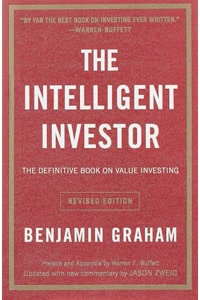
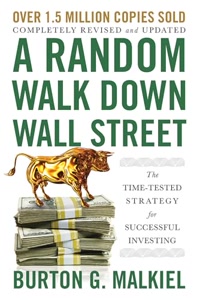
Recommended Reading

Recommended Books on Investing & Dollar Cost Averaging

As an Amazon Associate we earn from qualifying purchases.

Boost Your Capabilities

Professional Products to Boost Your Financial Analysis

As an Amazon Associate we earn from qualifying purchases.

Newsletter

Get Free Productivity Tips & New Tools First

Join makers and developers who care about privacy. Every issue: new tool drops, productivity hacks, and insider updates — no spam, ever.

Priority access to new tools
Unsubscribe anytime, no questions asked