Length Converter

Convert between various length units including metric, imperial, and astronomical units.

The Length Converter is a free online tool for converting between metric, imperial, and astronomical length units including meters, feet, inches, centimeters, kilometers, miles, nanometers, micrometers, astronomical units, light years, and parsecs. From everyday measurements to cosmic distances, this converter provides instant, precise results. All calculations run locally in your browser.

Scaling Metrics...
Your data stays in your browser
Was this tool useful?
Tutorial

How to use

1
1

Usage Step

Convert between various length units including metric, imperial, and astronomical units.

Guide

Complete Guide to Length Conversion

What Is Length?

Length is the fundamental physical quantity that measures the distance between two points. It is one of the seven SI base quantities, with the meter as its standard unit. Length measurements are essential in nearly every field — from construction and manufacturing to astronomy and particle physics. Different industries and countries use different units, making conversion a daily necessity for engineers, scientists, travelers, and students.

Why Length Conversion Matters

The world uses two main measurement systems: metric (meters, centimeters, kilometers) and imperial (inches, feet, miles). International trade, travel, and scientific collaboration require seamless conversion between them. A contractor working with imported materials needs to convert millimeters to inches. An astronomer might convert parsecs to light years. Without accurate conversion tools, dimensional errors can cause manufacturing defects, construction failures, or misunderstood research data.

Common Length Units

Metric units scale by powers of 10: nanometers (nm) for semiconductor circuits, micrometers (μm) for cell biology, millimeters and centimeters for everyday objects, meters for room dimensions, and kilometers for road distances. Imperial units include inches, feet, yards, and miles. Astronomical units (AU) measure solar system distances, light years measure interstellar distances, and parsecs are used in professional astronomy.

Best Practices

Always verify which unit system your specifications require. When mixing metric and imperial measurements, convert everything to one system before calculating. For construction, use exact conversion factors (1 inch = 25.4 mm exactly). For astronomy, remember that 1 AU ≈ 149.6 million km, 1 light year ≈ 9.461 trillion km, and 1 parsec ≈ 3.2616 light years.
Examples

Worked Examples

Example: Converting 6 Feet to Centimeters

Given: 6 ft

1

Step 1: 1 foot = 30.48 cm

2

Step 2: 6 × 30.48 = 182.88 cm

Result: 6 feet = 182.88 cm

Example: Converting 1 Light Year to Kilometers

Given: 1 ly

1

Step 1: 1 light year = 9.461 × 10¹² km

2

Step 2: = 9,461,000,000,000 km

Result: 1 light year ≈ 9.461 trillion km

Example: Converting 500 Millimeters to Inches

Given: 500 mm

1

Step 1: 1 inch = 25.4 mm exactly

2

Step 2: 500 ÷ 25.4 = 19.685 inches

Result: 500 mm ≈ 19.69 inches

Use Cases

Use cases

Construction and Manufacturing

Builders and manufacturers regularly convert between metric and imperial measurements when working with international specifications. Whether you need to convert millimeters to inches for drill bit sizes, meters to feet for room dimensions, or kilometers to miles for site distances, this converter ensures accuracy across measurement systems and prevents costly dimensional errors in production.

Science and Astronomy

Scientists work across vastly different length scales — from nanometers in nanotechnology to parsecs in astrophysics. This converter handles all these scales, letting researchers quickly translate between light years, astronomical units, kilometers, and meters when analyzing data from different sources or preparing papers for international journals that may use different conventions.

Travel and Everyday Life

International travelers need to convert between kilometers and miles for driving distances, centimeters and inches for clothing sizes, and meters and feet for height measurements. This tool makes it easy to understand foreign measurements instantly, whether you are shopping for clothes in Europe, hiking trails measured in kilometers, or comparing height in different unit systems.

Formula

Conversion Formulas

Meters to Feet

ft=m×3.28084\text{ft} = \text{m} \times 3.28084
VariableMeaning
ftLength in feet
mLength in meters

Inches to Centimeters

cm=in×2.54\text{cm} = \text{in} \times 2.54
VariableMeaning
cmLength in centimeters
inLength in inches

Kilometers to Miles

mi=km×0.621371\text{mi} = \text{km} \times 0.621371
VariableMeaning
miLength in miles
kmLength in kilometers

Frequently Asked Questions

?How many centimeters are in an inch?

One inch equals exactly 2.54 centimeters. This is an exact definition — not an approximation — established by the international yard and pound agreement of 1959.

?How do I convert feet to meters?

Multiply the feet value by 0.3048. For example, 6 feet × 0.3048 = 1.8288 meters. One foot equals exactly 0.3048 meters.

?What is an astronomical unit (AU)?

An astronomical unit is approximately 149,597,870.7 km, roughly the average distance from Earth to the Sun. It is used to express distances within our solar system.

?How many feet are in a meter?

One meter equals approximately 3.28084 feet. For rough estimation, multiply meters by 3.3 for an approximate value in feet.

?What is the difference between a nautical mile and a regular mile?

A nautical mile equals 1,852 meters (1.15078 regular miles), while a statute mile equals 1,609.344 meters. Nautical miles are used in maritime and aviation navigation.

?Is this length converter free?

Yes, the tool is completely free with no registration required and no usage limits.

?Is my data private?

All calculations happen locally in your browser. No data is sent to any server, ensuring complete privacy.

?Can I convert astronomical distances?

Yes. The converter supports astronomical units (AU), light years (ly), and parsecs (pc) for cosmic distance conversions.

Help us improve

How do you like this tool?

Every tool on Kitmul is built from real user requests. Your rating and suggestions help us fix bugs, add missing features and build the tools you actually need.

Rate this tool

Tap a star to tell us how useful this tool was for you.

Suggest an improvement or report a bug

Missing a feature? Found a bug? Have an idea? Tell us and we'll look into it.

Related Tools

Recommended Reading

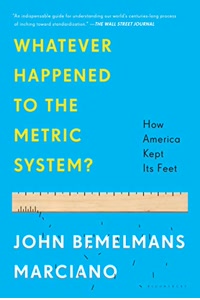
Recommended Books on Unit Conversion & Measurement Systems

As an Amazon Associate we earn from qualifying purchases.

Boost Your Capabilities

Professional Products to Boost Your Connectivity

As an Amazon Associate we earn from qualifying purchases.

Newsletter

Get Free Productivity Tips & New Tools First

Join makers and developers who care about privacy. Every issue: new tool drops, productivity hacks, and insider updates — no spam, ever.

Priority access to new tools
Unsubscribe anytime, no questions asked