OKRs (Objectives & Key Results) Tracker

Track your Objectives and Key Results with progress bars, status indicators, and automatic progress calculations. Free and private.

The OKR Tracker lets you manage Objectives and Key Results with visual progress bars, color-coded status indicators, and automatic progress calculations. Create objectives, define measurable key results with target and current values, and track overall progress across your entire OKR hierarchy. All data is saved locally in your browser.

Your data stays in your browser
Was this tool useful?
Tutorial

How to Use the OKR Tracker

1
1

Create Objectives

Click 'Add Objective' and enter a clear, ambitious goal along with a description and owner.

2
2

Define Key Results

Under each Objective, add measurable Key Results with a target value, current value, and unit of measurement.

3
3

Update Progress

As work progresses, update the 'Current' values. The tool automatically recalculates percentages and color-codes the status.

4
4

Review and Iterate

Use the overall progress bar and per-objective status to identify off-track areas and reallocate effort.

Guide

Complete Guide to OKRs (Objectives & Key Results) Tracker

What is OKRs (Objectives & Key Results) Tracker?

OKRs (Objectives & Key Results) Tracker is a specialized online tool designed for working with OKRs and goal setting. It provides an intuitive, streamlined interface that simplifies complex calculations or operations that would otherwise require specialized desktop software or tedious manual computation. Built with modern web technologies, the tool runs entirely in your browser, ensuring that your data remains private and results are delivered instantly without any server communication or external dependencies.

Why OKRs (Objectives & Key Results) Tracker Matters

Understanding and applying OKRs and goal setting correctly is essential in many professional and academic contexts. Manual approaches are not only time-consuming but also error-prone, and specialized desktop software often comes with expensive licensing costs. This free tool bridges that gap by offering professional-grade functionality accessible from any device. Whether you are a student, professional, researcher, or enthusiast, you will find this tool saves significant time and eliminates calculation errors.

Key Concepts

The core concepts behind OKRs and goal setting form the foundation for effective use of this tool. Understanding the underlying principles ensures you can interpret results correctly and apply them in your specific context. Each input parameter is designed to be intuitive, with clear labels and sensible defaults that guide new users while providing the flexibility experienced users expect. The tool handles all computational complexity while you focus on understanding and applying the outputs.

Best Practices

For the best results, ensure your input data is as precise and accurate as possible. Double-check units and formatting before running calculations. When comparing results across different scenarios, keep all other variables constant to isolate effects. The tool auto-saves your last inputs in browser local storage for convenience. Remember that while this tool provides accurate calculations, always verify critical results with domain-specific validation methods appropriate to your field.


Examples

Worked Examples

Example: Basic Calculation

Given: Standard input values for a typical use case

1

Step 1: Enter your known values into the tool's input fields

2

Step 2: The tool automatically computes results using the appropriate algorithms and formulas

3

Step 3: Review the output, verify it matches your expectations, and copy or share the result

Result: Instant, accurate output ready for use in your work or studies

Example: Advanced Scenario

Given: Complex input parameters for a professional use case

1

Step 1: Configure advanced settings to match your specific requirements and constraints

2

Step 2: Enter precise values based on real-world data from your project or research

3

Step 3: Compare the output with expected values or benchmarks to validate accuracy

Result: Professional-grade output suitable for reports, presentations, and analysis

Use Cases

Practical Use Cases

Quarterly Business Goals

Set company-wide OKRs for revenue growth, customer satisfaction, and product launches with measurable key results. This makes it an invaluable resource for professionals and students who need quick, accurate results without specialized software. All processing runs locally in your browser for complete privacy and instant feedback.

Engineering Team Sprint Goals

Track sprint-level objectives like reducing bug count, improving test coverage, and shipping feature milestones. This makes it an invaluable resource for professionals and students who need quick, accurate results without specialized software. All processing runs locally in your browser for complete privacy and instant feedback.

Personal Development

Set personal goals with measurable outcomes such as books read, courses completed, or skills acquired. This makes it an invaluable resource for professionals and students who need quick, accurate results without specialized software. All processing runs locally in your browser for complete privacy and instant feedback.

Startup Fundraising

Track fundraising objectives with key results for investor meetings held, term sheets received, and capital raised. This makes it an invaluable resource for professionals and students who need quick, accurate results without specialized software. All processing runs locally in your browser for complete privacy and instant feedback.

Frequently Asked Questions

?What are OKRs?

OKRs (Objectives and Key Results) are a goal-setting framework popularized by Intel and Google. An Objective is a qualitative goal, and Key Results are the measurable outcomes that indicate progress toward that goal.

?How many Key Results should each Objective have?

Best practice is 2-5 Key Results per Objective. Too few and you may miss important aspects; too many and focus gets diluted.

?What do the colors mean?

Green (70-100%) means on track, yellow (40-69%) means at risk and needs attention, and red (0-39%) means off track and requires immediate action.

?Is my data private?

Yes. All OKR data is stored exclusively in your browser's localStorage. Nothing is transmitted to any server, ensuring complete privacy.

?Is the OKR Tracker free to use?

Yes, it is completely free with no sign-up required. There are no usage limits or hidden fees.

?How is overall progress calculated?

Each Key Result's progress is calculated as (current / target) × 100. The Objective progress is the average of all its Key Results. Overall progress is the average of all Objectives.

?Can I use this for team OKRs?

Yes. You can assign different owners to each Objective and track the entire team's OKRs in one place. Each team member can also run their own instance.

Help us improve

How do you like this tool?

Every tool on Kitmul is built from real user requests. Your rating and suggestions help us fix bugs, add missing features and build the tools you actually need.

Rate this tool

Tap a star to tell us how useful this tool was for you.

Suggest an improvement or report a bug

Missing a feature? Found a bug? Have an idea? Tell us and we'll look into it.

Related Tools

Recommended Reading

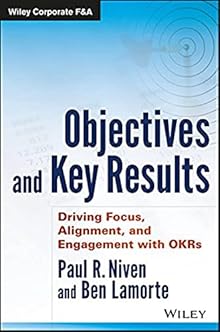
Recommended Books on OKRs & Goal Setting

As an Amazon Associate we earn from qualifying purchases.

Boost Your Capabilities

Professional Products for Goal Tracking

As an Amazon Associate we earn from qualifying purchases.

Newsletter

Get Free Productivity Tips & New Tools First

Join makers and developers who care about privacy. Every issue: new tool drops, productivity hacks, and insider updates — no spam, ever.

Priority access to new tools
Unsubscribe anytime, no questions asked